Self Publishing Show Live 2026
How to Work
With an (AI) Agent
...and why you probably want to.
Michael Stewart, Sudowrite
Full disclosure
I built this deck with my AI agent.
The ideas are mine. The words are mine. The HTML is his. The workflow was collaborative.
But first
Unpacking "Author"
(Your Actual Job Description)
Marketer
Manager
But why?
It's not a question of talent.
No one can do it all.
Not perfectly, at least. And not without help. But you will have to make decisions about all of these things, even when the decision is "This is not the best use of my time."
Consider
What to hand off?
Can do and want to
Your creative decision making. Things like taste, voice, canon, ethics, emotional truth, reader promise, and final approval. But also, anything you want to do—things that are precious to you!
Can't do or don't want to
Research, summaries, checklists, comparisons, edits, cleanup passes, asset drafts, calendar math. SEO? Marketing? Admin tasks (or anything you'd consider paying someone else to do).
Make your own list.
You're doing everything on this list already, so start from a place of assuming it's all yours. Circle the things you'd be willing to hand off to a trusted assistant.
Basically
What would you be willing to hand off to a human assistant?
Important caveat
"Agent" is a squishy term.
(But then, so is AI.)
Every product you use right now is adding an "agent" of its own, but some of these are really just chatbots.
The important question is not what the company calls it. The important question is: Can it do the things you need fairly autonomously?
Let's explain.
A Very Brief History
From autocomplete to agents
Autocomplete
Suggests the next word or words in a string of words.
Chatbot
Trained to respond probabilistically to what was said to it.
Assistant
Trained to make decisions that help it complete tasks.
Agent
Understands a goal, plans steps, uses context, and helps move work forward.
Useful differentiators
What does an agent do differently?
An assistant responds to requests.
An agent proactively pursues goals.
Six Things
Anatomy of an agent.
The AI model(s)
One or more large language models doing the actual thinking. This is the engine.
The job description
A prompt framework that tells the agent who it is, how it works, and what matters.
Everything it knows
Your notes, files, prior conversations, and anything you've told it to remember.
What it can use
What you've said it's allowed to use—apps, services, the web, up to and including your whole computer.
How you talk to it
Could be terminal, a browser page, a dedicated application, or even a text message. Your call.
What keeps it alive
The server hosting the agent—might be your laptop, but if you want it always-on 24/7, you should consider a $5/mo VPS, or a Mac Mini/NAS in your attic.
An agent lives and works somewhere, even while you sleep.
Right now
The combined tool landscape
Writing and publishing tools
Tools built to support the creative process in particular. Fiction-aware workflows, manuscript context, story bibles, drafting, revision, and writing-adjacent support.
General AI assistants
Your chatbots are great for research and planning. Brainstorming, summarizing, drafting copy, analyzing text, making plans, and working with uploaded files.
Automation tools
Repetitive admin, notifications, publishing operations, and moving data between the tools you already use.
Agents
These multi-tools are super capable AI-powered blank slates, intended to be personalized. They work across Maker, Marketer, and Manager domains. They may or may not have an interface, but can typically even use the tools mentioned above on their own.
Right now
The combined tool landscape
Writing and publishing tools
Tools built to support the creative process in particular. Fiction-aware workflows, manuscript context, story bibles, drafting, revision, and writing-adjacent support.
General AI assistants
Your chatbots are great for research and planning. Brainstorming, summarizing, drafting copy, analyzing text, making plans, and working with uploaded files.
Automation tools
Repetitive admin, notifications, publishing operations, and moving data between the tools you already use.
Agents
These multi-tools are super capable AI-powered blank slates, intended to be personalized. They work across Maker, Marketer, and Manager domains. They may or may not have an interface, but can typically even use the tools mentioned above on their own.
Durable workflows
Use (or create) repeatable flows.
Complete any task
Tell the agent to do something finite and it will keep at it till it's done.
Put it on repeat
Re-run a task on a cadence — a daily review, polling until something's ready, or repeating a workflow without re-asking each time.
Pressure-test an idea
Challenge assumptions, ask sharper questions, and find weak spots before readers do.
Protect continuity
Compare a scene or plan against the story facts, series promises, and open threads.
A skill is a reusable way to tell the agent how you like to work.
get the most from ai agents
No matter which agent you'd like to work with, in order to do its best work an agent needs context.
Telling the agent who you are, what you write, and how you work is key.
You need this
The Author Context File
A whole bunch of context you have in your brain (and on your hard drive) that can help the agent help you.
Context turns agents into informed & capable collaborators.
Minimum viable memory
What goes inside?
Author identity
What you write, who you write for, genres, tropes, promises, and what your work should never feel like.
Creative preferences
Drafting style, feedback style, sacred boundaries, and what kind of help you usually reject.
Books and series
Pen names, current projects, character/world details, timelines, comp titles, and reader expectations.
Voice and brand
Sample newsletter, sample blurb, sample scene, tone preferences, words you use, words you hate.
Business context
KU or wide, publishing cadence, launch process, newsletter cadence, ad comfort, revenue goals.
Agent rules
What it may draft, what it must ask before doing, what it should never do, and what good looks like.
Then what
Here's what that lets you do.
The agent can be pretty helpful once it's primed with some vitals.
Maker support Examples
Need an assist on creative admin?
Continuity & Series Memory
"I'm writing book four and am losing the thread. I need a better way to track the details."
- Summarize prior books
- Extract character and worldbuilding details
- Audit your work and flag contradictions
- Maintain a series bible
- Create "remember before drafting" briefs
Beta Feedback Analysis
"I got some conflicting beta reader feedback, and I'm not sure how/whether to action it."
- Analyze and group feedback by theme
- Evaluate substance, separating taste from repeated issues
- Identify high-priority revision areas
- Turn messy notes into a revision plan
- Generate scene-level tasks
Agent as a writing assistant, facilitating the creative process and surfacing possible issues for the author.
Marketer support Examples
Need help with that whole
"write to market" thing?
Positioning & Blurb Assistant
"I know what my book is, but not how to explain it to readers... at least, in a way that'll make them buy it."
- Identify reader promise
- Evaluate the existing market comps
- Draft retailer description, newsletter pitch, ad hooks, and social captions
- Adapt tone by target audience
Launch Campaign Assistant
"My book launches in six weeks and I am already behind."
- Build launch calendar
- Identify missing assets
- Draft emails and ARC reminders
- Repurpose copy across platforms
- Flag missing decisions
Agent as a marketing assistant, using (simulated) domain expertise and doing vital research work.
Manager support examples
The worst part of being your own boss? Your employee.
Operations Assistant
"I have no idea what I'm doing with this."
- Create production checklist
- Track down platform requirements
- Build a backward calendar
- Scheduling or actioning vendor emails
- Prepare handoff notes
- Collate receipts, tax research/prep
Backlist Audit Work
"I have old books underperforming, and I do not know where to start."
- Review metadata
- Suggest refresh priorities
- Create a maintenance calendar
- Compare books by opportunity
- Surface stale assets
- Google Ads campaign prep
Agent as an operator: handling (or automating) structured, repetitive, and easy to postpone tasks for you.
Audience moment
Agents are powerful. You don't have to choose. But it helps to have a /goal in mind.
Maker
"I am stuck in the work itself."
Drafting, revision, feedback, continuity, creative decisions.Marketer
"I struggle to connect the work to readers."
Blurbs, ads, newsletter, launch, positioning, visibility.Manager
"I am drowning in the business and logistics."
Deadlines, platforms, contractors, files, money, operations.Your agent should not feel like "yet another" tool.
It should allow you to personally drive fewer tools yourself.
Why this matters now
Advancements will make working with agents scary easy (and soon).
Worst case you're preparing your author business so that any good human assistant could understand it and help!
The messy middle
A few agent gotchas.
Increasingly powerful models, robust harnesses… but a web that wasn't built for them.
Demo
Creating a Story (or Series) Bible
Give context
Upload or paste series notes, prior summaries, and the new scene.
Ask for a brief
"Before drafting this scene, what should I remember?"
Evaluate the scene
Ask it to flag contradictions, unresolved threads, and canon questions.
Working with agents
My top tips.
When you get home
Run one small agent experiment.
- Pick an agent to experiment with.Choose the tool that best matches the bottleneck you named.
- Prime it with your author context.Give it your project, voice, goals, constraints, and rules.
- Pick one tedious task.Not "fix my career." Something specific enough to delegate.
- Evaluate the results.Judge usefulness, accuracy, voice fit, and whether it reduced effort.
- Close the loop.Tell it what worked, what missed, and how it should improve next time.
Practical advice
Use an agent to set up your agent.
Always-on assistants are powerful—but complex to configure. Don't go it alone.
First
Managed agentic coding tools
Tools like Codex and Claude Code can already handle the project work. Start there, and if you still want an always-on assistant, get help from one of these to set that up. (They can run your computer's terminal, edit files, and use managed services' CLI tools to set things up, so you don't have to.)
Then
Always-on personal agents
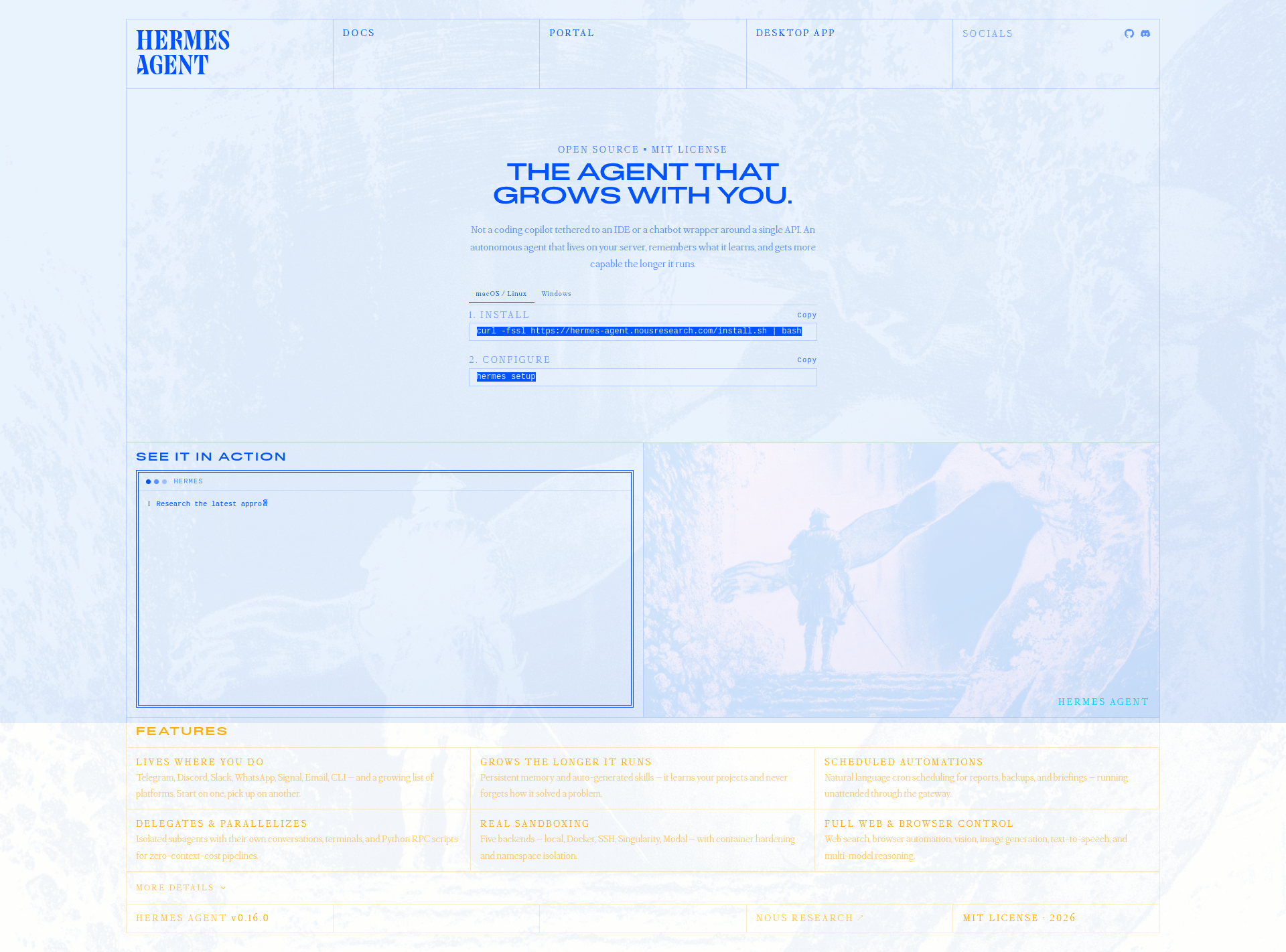
Systems like Hermes or OpenClaw run continuously and manage tasks on your behalf—but configuring and even maintaining one can be a serious project. Let a coding agent do all the heavy lifting.
The easiest way to get an agent set up is to ask an agent to do it.
Closing thought
Don't overthink it.
Prime the pump, point it at a problem, and iterate.
Thanks!
Questions?
Thanks!
Notes & Links
Scan to grab the slides, notes, and links from this talk.